Can you snorkel at Whitehaven Beach? Where to snorkel nearby
By GSL Marine · 31 October 2026
Quick answer: You can swim at Whitehaven Beach, but it’s a sandy beach, not a reef, so there isn’t much coral to see right off the sand. The good snorkelling is on the fringing reefs nearby. The best known is Chalkies Beach on Haslewood Island, just across the water from Whitehaven. GSL Marine’s Reef & Beach Experience and Ultimate Whitehaven Experience include snorkelling at a fringing reef (normally Chalkies), with all the gear provided.
Local details: GSL Marine
GSL Marine, Port of Airlie Marina, Port Dr, Airlie Beach QLD 4802
Phone: (07) 4015 4191 · Open daily 9am to 5pm
Check-in: Rufus & Co Cafe, 33 Port Drive, Port of Airlie (five minutes’ walk from the Airlie Beach main street). Whitehaven tours check in at 8:30am, depart 9:00am and are back at about 4:45 to 5:00pm.
What’s under the water at Whitehaven Beach?
Whitehaven is famous for what’s above the water: seven-plus kilometres of soft white silica sand and very clear, shallow water. Queensland Parks describes the shallows as full of schools of tiny tropical fish, and you may see sea turtles cruising past. It’s a beautiful place to swim and float around with a mask on.
But the sea floor off the main beach is mostly sand. If you want coral, reef fish and the chance of a turtle up close, you need a fringing reef. Those are the reefs that grow around the edges of the islands.
Where to snorkel near Whitehaven Beach
Chalkies Beach, Haslewood Island
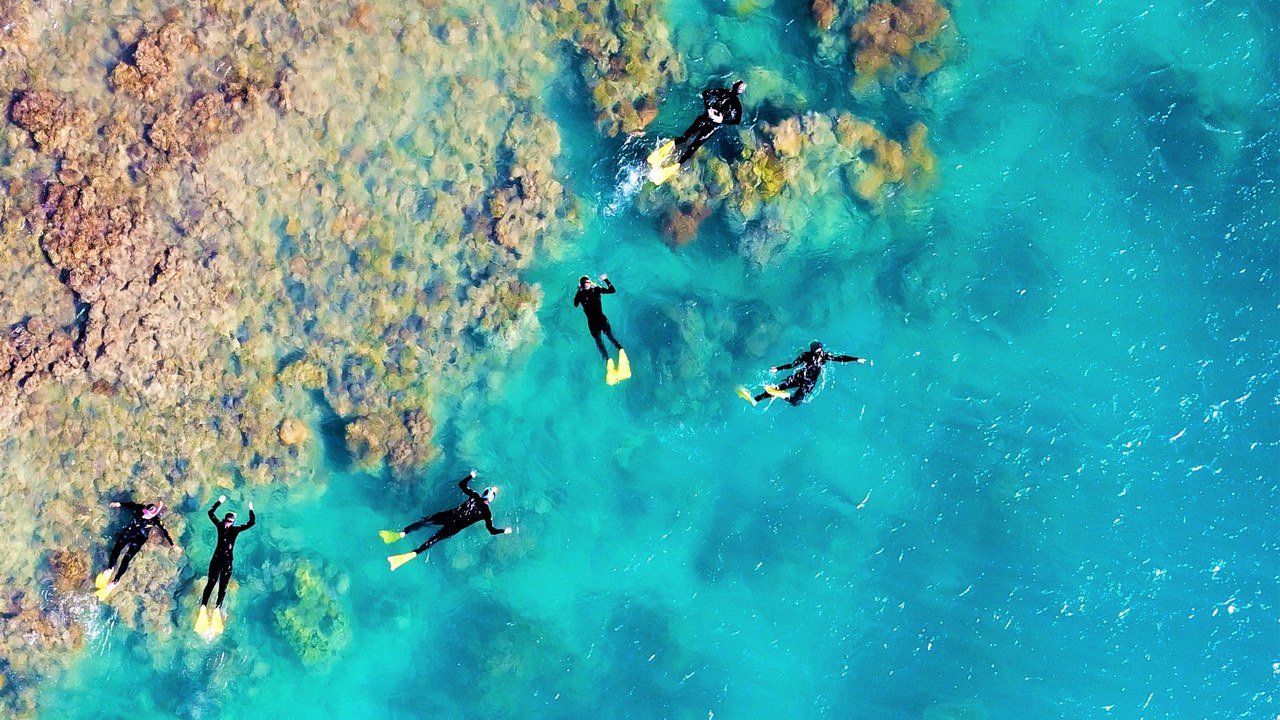
Chalkies sits on the western side of Haslewood Island, directly across from Whitehaven. It has the same white silica sand and a fringing reef just offshore. Local sailing guides say the northern end has the best coral and fish, especially around low to mid tide. Green and hawksbill turtles are often seen feeding in the area, though sightings are never guaranteed.
The Great Barrier Reef Marine Park Authority lists public moorings at Chalkies. That tells you it’s a well-used spot that’s managed to protect the reef.
Other fringing reefs
On our tours, snorkelling is normally at Chalkies. If the wind, tide or swell aren’t right there, the crew will move to another fringing reef that suits the conditions on the day.
Snorkelling on a GSL Marine Whitehaven day
Two of our Whitehaven tours include snorkelling:
- Reef & Beach Experience, from $188 adult and $138 child (4 to 14): snorkelling at a fringing reef, plus two to three hours on Whitehaven Beach.
- Ultimate Whitehaven Experience, from $217 adult and $167 child: snorkelling and the guided Hill Inlet walk, with about an hour on the beach for lunch.
Both include masks, snorkels, fins and, in season, stinger suits. Life jackets are compulsory for children under 12 in the water. For snorkelling, children need to be 6 or older, or competent swimmers. Snorkelling needs a medium level of fitness, so it isn’t suitable for people with heart conditions or medical conditions that physical activity could affect.
Under 4s travel free. Prices are from the live booking pages, checked 31 October 2026, and the booking page always shows today’s price.
Book the Reef & Beach snorkelling day
Snorkelling tips for first-timers
- Practise on the sand first. Put your mask on, breathe through the snorkel and get used to it before you swim out.
- Wear the stinger suit when the crew hands it out. From November to May the risk of marine stingers is higher. Our stinger season guide explains why.
- Use reef-safe sunscreen, and put it on well before you get in the water.
- Keep your fins off the coral. Float flat and kick gently. Coral is alive and grows very slowly.
- Look, don’t touch. That goes for turtles and fish too.
- Stay with your group and follow the crew’s directions. Currents around the islands can change with the tide.
- Bring an underwater camera if you have one. Camera hire isn’t included in the tour price.
When is the best time to snorkel in the Whitsundays?
You can snorkel all year round. The calmest, clearest days usually come with lighter winds, and you can’t predict those far ahead. The bigger seasonal difference is marine stingers. Queensland Government advice is that stingers are present all year, but the risk is higher from November to May. In those months, wear a full-body lycra suit in the water.
Tide matters too. Fringing reefs are usually easiest to enjoy around low to mid tide, which is one reason the crew plans the order of each day around the tide.
Not into snorkelling?
That’s fine. The Whitehaven Beach Club Pass gives you four to five hours on the sand, with shade, paddle boards and beach games. The Whitehaven Wanderer swaps the reef for the Hill Inlet lookout walk. Compare them all on our Whitehaven Beach tours page.